Solar power can provide electricity, hot water, warm pools, heating and even energy for cooking. Facts about solar energy… these benefits need an initial investment that will pay for itself over a reasonably short period of time.
Instead of paying power companies for use of non-renewable resources, families can not only save money, but help save the environment as well.

Quick Facts About Solar Energy
Most systems that provide solar power for residential homes compliment the traditional power systems in the house. During extreme heat or cold, solar powered home heating and cooling systems can be supplemented with additional use of traditional systems.
Even those residential homes that obtain only forty to seventy percent of their power from solar power systems enjoy a huge savings over a period of time.
Depending on what kind of solar power for residential homes is chosen, the initial investment can range from about $2,000 for a do it yourself home water heating system to much higher amounts for systems that store power in batteries for use of heating, cooling, cooking and lighting as well as hot water.
It takes the average homeowner 7 to 15 years to pay off their solar panels. Homeowners living in sunnier areas or states with good incentive programs can do it in two years.
A small home created solar powered pool heating system can be built for as little as $1,000 or perhaps even less. Solar facts: Use of recycled material in these solar power residential systems can reduce the cost significantly. This is one area where it pays to be creative.
Interesting facts about solar energy: Did you know that you can also store the energy that comes from sunlight? This is true and so you can still use solar energy even when there’s no sunlight. So whether it’s nighttime or it’s raining, you can use renewable and clean energy.
The solar technology can be differentiated into active and passive. Solar thermal collectors which harness solar energy and PV-panels (PV=photovoltaic) are examples of active solar technology. Passive technology includes design measures to improve air circulation (solar chimney) or heat rooms (sun-room).
Solar cookers, solar thermal systems, passive solar greenhouse heater and many others solar products are excellent alternatives, but you need to know how to use them effectively.
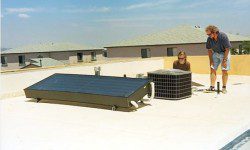
Some residential homes display large roof top arrays of solar panels called solar thermal collectors.
This type of solar panel is often used to heat pool water and provide some or all of the household’s hot water energy needs. Often several solar arrays are necessary to meet the needs of an average family’s solar power requirements.

Ordinary homeowners still find solar systems too expensive and that’s the main reason why many people still opt for conventional electricity. With the modern solar technology of today, scientists and researchers are looking for cost effective ways to offer solar systems to the public.
The very first step that you need to take is to determine your monthly electrical consumption. You can do this by checking your electricity bills and get the average monthly usage. You also need to consider the weather or climate in your area.

After determining your electric consumption, you can now decide on the appropriate inverter. A bigger inverter can accommodate expansion in the future.
For people with limited resources or budget, you can start with the simplest projects like outdoor lights and garden features. Even if you use smaller solar panels, you can still cut down your electrical bills by 50%-80%. Have a look at possible incentives and solar energy information for renewable clean energy: find policies & incentives by U.S. state.
Solar panel installation:
Of course, if you are not a do it yourself handy person, you can have a qualified, licensed and insured contractor provide and install a complete solar system for your residential home. Of course, this is more costly than a do it yourself system but it can pay off in the long run.
Your solar power system will have a warranty and you will be assured of certain performance standards. If you choose to build your own panels from recycled materials, finding design plans online or in a book, there is no such guarantee or warranty.
You can choose to purchase commercially available solar panels for your home and install them yourself; this provides a warranty on the solar panel kits while saving money. Be sure to read the warranties and be certain that they will be valid in a self-installed system.
How does solar power work?
A short definition: Solar power is electricity generated from the levels of natural energy contained within the sun’s rays (solar radiation). A home solar photovoltaic system includes solar panels, a battery, a charge regulator, an inverter, wiring, support materials. Sunlight is converted to electricity by the solar panels and the battery stores the electricity.

Solar Energy Pros And Cons
The advantages and disadvantages of solar energy: Try to have realistic expectations when using solar solutions. You can’t give up conventional electricity completely but if you can use it together with solar energy, you can save a lot of money in the long run.
Solar panels can increase the value of a home more than a complete kitchen remodel.
Make this one-time investment and enjoy lasting benefits in the coming months and years. Residential solar power is an excellent investment and you too can enjoy a greener and clean lifestyle.

How complex or simple a system for residential solar energy is, is your choice. You will enjoy the knowledge that you are doing your part to save the dwindling resources of our planet. You will also enjoy the facts about solar energy that you will save on energy bills and help save the environment as well. Over time the solar energy for residential homes always pays for itself. More on the pros and cons of solar energy.
Image credits: what-if-solar-infographic credits | how much does solar costs credits